
Two years ago, most of the sellers I worked with treated social media as the top of the funnel. You posted, you ran a few ads, and you hoped people clicked through to the store. That model is not dead, but the social commerce trends shaping 2026 show it is no longer the whole story. Today the feed is the shop window, the fitting room, the review section, and sometimes the cash register, all on the same screen.
I spend my days building and fixing social selling programs for online brands. Most are small and midsize stores that cannot afford to waste a quarter chasing the wrong platform. The trends below are the ones I am actually seeing move numbers in client accounts, not the ones that make for a nice conference slide. Some of them will feel obvious. A few, however, run against what you have probably been told.
Let me start with the scale, because it frames everything else.
Social Commerce Trends by the Numbers: The Market Crossed a Line This Year
For a long time, social selling in the US felt like a promising side channel. That changed in 2026. eMarketer projects US social commerce sales of roughly $100.99 billion this year, the first time the channel has cleared the $100 billion mark. Globally, Shopify puts the market at close to $102 billion in 2026, supported by the 5.79 billion people now using social media.
The more interesting number, at least to me, is what is driving that growth. According to eMarketer, annual social commerce spend per US buyer is on track to nearly double between 2023 and 2027. In other words, the growth is coming from people spending more rather than from a flood of new buyers.
Read that again, because it changes how you should plan. The audience is not exploding. Instead, the people already buying through social are buying more often and spending more each time. That tells me customer retention strategies, repeat purchases, and trust matter more right now than raw reach.
Trend #1: Discovery Happens on Social, Checkout Happens Wherever It Is Easiest
The biggest shift I have watched over the past 18 months is a split between where people find products and where they pay for them.
Discovery is firmly social. Shopify reports that about 23% of Gen Z shoppers begin their product searches on TikTok, and eMarketer expects more than half of US social buyers to shop on TikTok in 2026. When I run audits for apparel and beauty clients, the first touchpoint for younger customers is almost never Google anymore. Usually, it is a video from someone who is not the brand.
Checkout, on the other hand, has become fragmented. Some platforms want to keep the whole transaction inside the app, while others have walked away from that idea entirely. Shopify notes that in 2026, a social sale can begin and finish on the platform, send the shopper to the brand’s own site, or do both depending on the channel. For sellers with a physical shop, social discovery can even become a way to increase foot traffic to your retail store.
My advice here is simple: stop trying to force one model. Build your social presence for discovery, then make sure every possible checkout path is fast and painless. That means your product catalog syncs cleanly, your landing pages load quickly on a phone, and nobody has to hunt for the size chart.
Trend #2: Meta Pulled Back From Native Checkout, and Your Website Matters Again
This one caught a lot of sellers off guard, so it deserves its own section.
Meta announced in June 2025 that Facebook and Instagram shops would move away from on-platform checkout and toward checkout on the seller’s own website. The change also ended payment processing, order management, and customer service features inside Meta’s Commerce Manager.
As a result, every “buy” tap on Instagram or Facebook now sends the shopper to your store. If your store is slow, cluttered, or confusing on mobile, you lose that sale, and you may not even see it in your reports.
What Happened to One Client After the Switch
I had a home goods client whose Instagram traffic held steady after the switch, but sales from that channel dropped almost by half. The culprit was not the content. Rather, it was a product page that took over five seconds to load on a mid-range phone and a checkout with seven form fields. We cut the fields, compressed the images using our usual ecommerce product photography tips, and moved the add-to-cart button above the fold. Sales recovered within six weeks. If your social traffic is leaking at the last step, start with these ways to reduce cart abandonment.
Why Social Commerce Trends Now Depend on Your Website
This is why I keep telling clients that social commerce is not just a marketing job. It is also a hosting job, a site speed job, and a checkout design job. Instagram still drives discovery at a large scale. Shopify reports that about half of US social buyers will shop on Instagram in 2026, while more than 69 million already buy on Facebook. That traffic only pays off if the destination is ready for it.
There is a reporting side effect too. Meta retired the combined website and shop conversion location, so advertisers now have to select the website conversion location instead. If your pixel and analytics setup was sloppy before, now is the time to clean it up.
Trend #3: Live Selling Grew Up
I was skeptical of live shopping in the US for years. It worked in China and in parts of Southeast Asia, but American shoppers seemed to treat it like a novelty. That skepticism is gone.
TikTok Shop told CNBC that its live shopping sales more than doubled in the first half of 2026 compared with the year before, with live sessions up more than 60% and streaming hours up more than 80%. Meanwhile, US live shopping is expected to approach $20 billion this year, around 35% higher than in 2025.
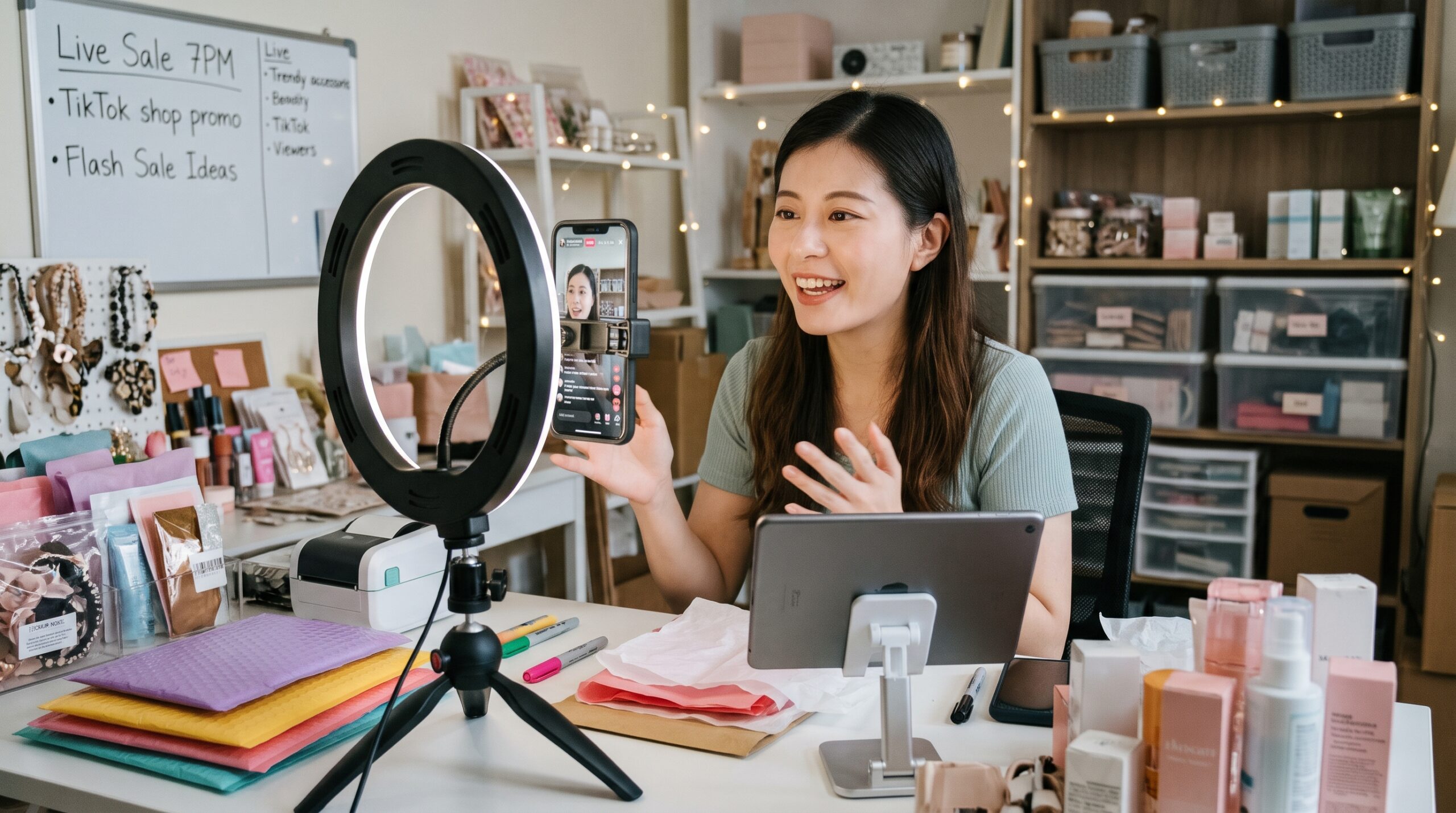
Here is what the hype pieces leave out. Live selling is operationally heavy. It needs a host who is comfortable on camera, a producer handling comments and inventory, and a consistent schedule so viewers know when to show up. The brands I see winning are not the ones doing one big launch stream a quarter. Instead, they go live at the same time every week, sometimes with only a few hundred viewers, and build a habit.
Plan for Live Selling Costs and Start Small
Live is also not free. On the marketplace side, Whatnot charges between 4% and 8% depending on product type, while TikTok takes 6% before payment processing. Factor that into your margins before you plan a stream around a deep discount.
If you are new to live, start small. Pick one product line with a story behind it, like a fabric that feels different or a tool that solves a specific annoyance. Show it in use, and answer questions in real time. Treat your set like a small shop display, borrowing from proven visual merchandising ideas. Above all, treat the first ten streams as practice, not as a revenue target.
Trend #4: Creators Are Becoming Storefronts
The line between a creator and a retailer is getting very thin. A creator with a loyal niche audience now functions like a small, curated shop that happens to sell other people’s products.
YouTube is the clearest example this year. The company says its Shopping affiliate program now includes more than 1.3 million creators, with gross merchandise volume growing 13 times over the past two years. It also reports that product tags generate more than twice as many clicks as links in a video description. In addition, Amazon officially joined the program, giving creators an easier way to tag Amazon products directly in their content.
YouTube also lowered the bar for who can participate. Creators in the YouTube Partner Program with at least 500 subscribers can now join the Shopping affiliate program.
How Sellers Can Tap Into Creator-Led Social Commerce Trends
What this means for sellers is simple: there is now a huge pool of small, specialized creators who can tag your products and earn a commission. You do not need a celebrity. In fact, I usually steer clients away from big names. A creator with 3,000 subscribers who reviews hiking gear every week will often outsell a lifestyle influencer with 300,000 followers, because the audience showed up specifically to make buying decisions.
The work here is relationship work. Seed products, offer fair commissions, and give creators real information about what makes the product different. Then step back and let them talk about it in their own voice. The moment you hand a creator a script, the content starts sounding like an ad, and the audience can tell.
Trend #5: Social Search Is the New SEO
People do not just scroll anymore. They search inside the apps. For example, they type “best running shoes for flat feet” into TikTok or YouTube the same way they used to type it into Google.
This changes how you write captions, titles, and on-screen text. I now treat every product video like a small search listing. The caption should include the words a real shopper would type, and the first few seconds should say clearly what the product is and who it is for. Spoken audio matters too, because platforms transcribe it. The same thinking applies to your store, so it pays to learn how to write product descriptions that match the language shoppers use.
A few habits I build into every client’s content calendar:
- Write captions that answer a specific question, not just a clever line.
- Use plain product names and category terms, not only brand jargon.
- Put key words in on-screen text early in the video.
- Reply to comments with full sentences, because comment threads get indexed and read.
This is one of the quieter social commerce trends, but it compounds. Content built for search keeps pulling in shoppers for months. By contrast, content built only for the algorithm’s mood of the week fades in days.
Trend #6: Customer Service Is Now Part of the Sale
On social, the line between marketing and support has basically disappeared. Someone asks about sizing in your comments, and fifty other people read your answer before deciding whether to buy.
The 2025 Sprout Social Index found that 81% of consumers say social media pushes them toward impulse purchases. It also found that 73% will buy from a competitor if a brand fails to respond on social.
That second number is the one I put in front of every client who tells me they check DMs “when they have time.” Slow replies are lost sales. On the other hand, fast, helpful replies are some of the cheapest conversions you will ever get.
With native checkout gone on Meta, DMs have taken on another role. They have become the place where hesitant buyers ask the last question before tapping through to your site. Treat your inbox like a sales floor. Keep saved replies for common questions, but always personalize them. Send the exact product link, not your homepage. Finally, close the loop when someone says they ordered, because that small follow-up helps build customer loyalty.
Trend #7: Trust and Disclosure Are Getting Stricter
As more selling flows through creators, regulators are paying closer attention, and so are shoppers.
The FTC’s updated Endorsement Guides define endorsements broadly enough to include fake reviews, virtual influencers, and tags in social media posts. They also make clear that disclosure of a material connection between a creator and an advertiser must be unavoidable. Furthermore, the guides spell out potential liability for advertisers, endorsers, and intermediaries alike, which means a brand cannot simply blame the creator if a sponsored post goes out without a proper label.
From my side, every creator agreement I write now includes clear disclosure requirements, placement rules for the label, and a review step before content goes live. It is not just about avoiding trouble. Clear disclosure actually builds trust, especially with shoppers who care about ethical consumerism. Shoppers are smart. They know when something is sponsored, and hiding it makes them suspicious of everything else you say.
The same goes for reviews. Do not buy them, do not script them, and do not filter out every negative one. A product page with only five-star reviews looks fake in 2026. In practice, a few honest three-star reviews with thoughtful replies from your team often do more for conversion than a wall of perfect scores. If your pages are thin on feedback, here is how to get more customer reviews the honest way.
Trend #8: Attribution Is Messier, So Measure What You Control
With checkout moving around between platforms and websites, tracking where a sale really came from has gotten harder. A shopper might discover a product on TikTok, watch a review on YouTube, ask a question on Instagram, and finally buy on your site three days later from a Google search. That cross-channel path is exactly why an omnichannel retail strategy matters.
I have stopped promising clients perfect attribution. Instead, we measure a mix of signals:
- Platform-level sales and conversion data where checkout happens natively.
- Site analytics with clean UTM tagging on every link we control.
- Creator-specific discount codes and affiliate links.
- Post-purchase surveys asking “Where did you first hear about us?”
That last one is low tech and wildly underrated. When the survey answers and the dashboard disagree, I trust the customers more than the dashboard.
Trend #9: The Winners Are Concentrating, So Niche Down
This is the uncomfortable trend. Social commerce rewards specialists. Platforms reward accounts that consistently produce content their audience engages with, and audiences reward sellers who clearly stand for something.
TikTok Shop is a good example of how lopsided it gets. One analysis of the platform found that the top 1% of sellers capture about 60% of all sales. That figure is a warning, but it is also an opportunity. You do not need to beat everyone. You need to own a corner.
The small sellers I see breaking through pick a narrow audience and serve it obsessively. Not “skincare,” but skincare for people working night shifts. Not “kitchen tools,” but tools for people cooking in tiny apartments. Values-led niches work too, as the latest sustainable shopping trends for 2026 show. A tight niche makes your content easier to write, your creators easier to find, and your customers more likely to come back.
How I Would Act on These Social Commerce Trends in the Next 90 Days
If I were starting fresh with an online store today, here is the order I would tackle things in:
Month one: fix the destination. Audit mobile speed, product pages, and checkout. Make sure every social link lands on the exact product, not a homepage. Then clean up your pixel and analytics. None of the other trends matter if the store leaks buyers.
Month two: build the content engine. Commit to a realistic posting schedule on one or two platforms where your customers actually are. Write captions for search, and start replying to every comment and DM within a few hours. In parallel, recruit five to ten small creators in your niche and send them product with no strings attached.
Month three: test live and scale what works. Run a weekly live session for at least eight weeks before judging results. After that, double down on the creators and content formats that drive real sales, and drop what does not.
That is it. No twelve-platform strategy and no viral moonshots. Just a store that converts, content that gets found, and people who trust you.
Final Thoughts on Social Commerce Trends for Online Sellers
Social commerce is no longer an experiment you run with leftover budget. It is a core sales channel, and it behaves differently from the ecommerce playbook most of us learned. The platforms will keep changing the rules. Meta already reversed course on checkout once, and I would not be surprised to see more shifts next year.
What does not change is the underlying behavior. People want to see products in use, hear from real humans, get quick answers, and buy without friction. If you build your business around those four things, you will be in good shape no matter which app is hot next year.
Ultimately, the social commerce trends worth paying attention to are the ones that bring you closer to your customer. Everything else is noise.
Frequently Asked Questions About Social Commerce Trends
What is social commerce?
Social commerce is the buying and selling of products through social media platforms, where discovery, product research, and sometimes the purchase itself happen inside apps like TikTok, Instagram, YouTube, and Facebook. The Shopify guide to social commerce trends gives a solid overview of how it works today.
How big is the US social commerce market in 2026?
eMarketer forecasts US social commerce sales will pass $100 billion for the first time in 2026. You can see the breakdown in eMarketer’s US social commerce forecast chart.
Can I still check out directly on Instagram and Facebook?
No. Meta moved Facebook and Instagram shops to website checkout, so shoppers are now sent to the seller’s own store to pay. PPC Land’s breakdown of the Meta checkout change explains what changed for sellers and advertisers.
Is live shopping worth it for small online sellers?
It can be, especially on TikTok Shop, where live sales more than doubled in the first half of 2026. It works best with a consistent weekly schedule and a host who knows the product well. Shopifreaks reports on TikTok Shop’s live shopping growth with platform fee details.
Do creators need to disclose paid product promotions?
Yes. In the US, creators must clearly disclose any financial, family, or employment relationship with a brand they promote, and brands share responsibility. The FTC’s Disclosures 101 for Social Media Influencers lays out exactly what is required.
How can small sellers work with YouTube creators?
Through the YouTube Shopping affiliate program, creators can tag your products and earn commissions, and eligible creators now need only 500 subscribers to join. Storyboard18’s coverage of the YouTube Shopping threshold change explains how it works.
References
- Shopify. Social Commerce Trends for 2026: What’s Changing
- eMarketer. US Social Commerce Sales Will Surpass $100 Billion in 2026
- eMarketer. Social Commerce Sales Are Rising Faster Than the Number of Social Buyers
- Blogging Wizard. Social Commerce Statistics and Trends
- PPC Land. Meta Phases Out Facebook and Instagram Shops Checkout
- Shopifreaks. TikTok Shop’s Live Sales More Than Double in the First Half of 2026
- Technobezz. YouTube Expands Shopping Affiliate Program for Creators
- YouTube Official Blog. YouTube Shopping Creators Can Now Tag Amazon Products
- Storyboard18. YouTube Opens Shopping Affiliate Program to Creators With 500 Subscribers
- Sprout Social. The 2025 Sprout Social Index
- Manatt. An In-Depth Look at the FTC’s Updates to the Endorsement Guides
- Federal Trade Commission. Disclosures 101 for Social Media Influencers
- Mean CEO Blog. TikTok Shop Marketing Statistics 2026
Leave a comment